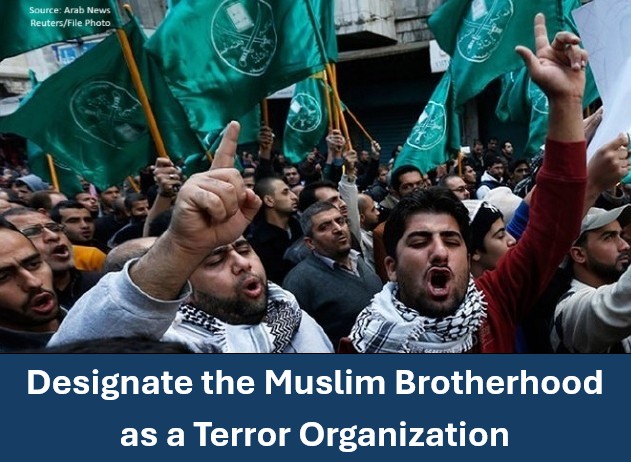
RFK Jr. stood in Michigan this week and said the words most officials spent years avoiding. People living under the Muslim Brotherhood, he said, “live inside of a death cult.” He described an ideology of victimization, murder, and genocide. He said its core is hatred of Jews, hatred of America, and hatred of Western civilization. He said they want to obliterate democracy and install Sharia law under a caliphate. He said naming the group is not Islamophobia. It is accuracy.
That is not a fringe statement. It is a cabinet official describing the documented project of a network whose own 1991 memorandum, recovered by the FBI and entered into evidence in the Holy Land Foundation case, called its work in America a “grand jihad” to destroy Western civilization from within so that Islamic rule would prevail. The Brotherhood was founded in Egypt in 1928 to restore Sharia as the governing authority over society. Its Palestinian branch is Hamas. Specific Brotherhood chapters in Lebanon, Egypt, and Jordan have already been designated terrorist organizations by the Trump administration for material support to Hamas and related violence.
For decades the strategy worked because the name stayed unspoken. Front groups built institutions, influenced policy, and trained Americans to treat any description of the agenda as the real offense. The explicit goal of gradual replacement of Western legal and cultural norms with Sharia was treated as a conspiracy theory rather than a stated plan. That protective silence is cracking. When a Health and Human Services Secretary calls the ideology a death cult and the administration has already designated Brotherhood branches as terrorists, the old rules lose force. Candidates with documented associations to Brotherhood-linked networks are facing direct questions in real races. Voters are hearing the distinction that was previously buried: criticism of a political movement that seeks Sharia as the ultimate authority is not the same as criticism of individual Muslims.
This is not only about immigration or foreign policy. It is about which set of rules governs life in America. One system treats the individual as the bearer of rights that no religious authority can override. The other treats the individual as subordinate to religious law interpreted by authorities who claim divine sanction. One allows open criticism of ideas. The other has historically treated blasphemy and apostasy as punishable. One separates religion from coercive state power. The other fuses them. When officials finally name the Brotherhood and its stated goals, they are describing one organized expression of a larger ideological contest that has already reshaped parts of Europe and is actively contesting ground in American cities and institutions.
One week remains until the midterms. The networks that prefer an America unwilling to name this contest are organized. So are the Americans who have watched the results of delayed recognition elsewhere. Naming the death cult and the Sharia agenda does not finish the work. It removes one barrier that made the work harder.
The question is whether Americans will keep the pressure on the project that has already stated, in its own documents and in the public words of its advocates, what it wants. Hold the line. Vote to keep the fight for the soul of America on the terms America was founded to defend. The silence is ending. The fight is not.